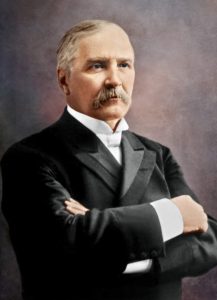
Mykola Vitaliyovych Lysenko (March 22, 1842 – November 6, 1912)
Mykola Vitaliyovych Lysenko (born March 22, 1842 in Hrynky near Kremenchuk, Poltava Governorate, Ukraine – died November 6, 1912, Kyiv, Ukraine) is the father of modern Ukrainian classical music. He was a prominent Ukrainian composer, ethnomusicologist, conductor, pianist, teacher, and public figure. Lysenko’s prolific life’s work laid the foundation for the further development and expansion of Ukrainian musical culture. During his lifetime, Mykola Lysenko earned the title of «father of Ukrainian music», he is a pivotal figure in the Ukrainian national revival, a movement that sought to reassert Ukrainian identity and culture during a period of imperial Russian control. He influenced a large group of Ukrainian composers, including Stetsenko, Stepovyi, Leontovych, Koshyts, and Liudkevych.
Contents
- BIOGRAPHY
- Background
- Early Life
- Education
- Involvement in the Kyiv Hromada and Ukrainian Cultural Circles
- Civil Service in Tarashcha (1865–1867)
- Olha O’Connor – the First Wife
- Leipzig Conservatory Studies
- Kyiv Period
- St. Petersburg Studies
- Mykola Lysenko’s Kyiv Years (1878-1912)
- Olha Lypska – The Second Wife (Common-Law) and Mother of His Children
- Mykola Lysenko’s Final Years (1904–1912)
- Mykola Lysenko’s Last Love
- Death and Funeral
- Lysenko’s Creative Legacy
- SHEET MUSIC
BIOGRAPHY
Background
Mykola Lysenko was born on March 22nd, 1842 in Hrynky near Kremenchuk, Poltava Governorate (then part of the Russian Empire, now Ukraine), into a family with noble roots. The Lysenko family was wealthy and educated.
Mykola’s father, Vitaliy Romanovych, came from an old aristocratic family, tracing his lineage back to the Cossacks of the 17th century. He was a colonel in the Russian Imperial Army, specifically in the cavalry, reflecting the family’s status within the gentry of the Poltava Governorate. His military career placed him within the imperial structure, but his family’s ties to Ukrainian culture remained significant. Vitaliy’s exposure to both Russian imperial and Ukrainian local traditions created a complex cultural dynamic in the household.
Vitaliy Romanovych provided the family with social standing and financial stability, which allowed Mykola access to quality education, including private tutors and later studies at prestigious institutions. While Vitaliy’s military career aligned him with the Russian Empire, he did not suppress the Ukrainian cultural influences in the household. Mykola’s early exposure to Ukrainian folk songs and traditions, which later defined his musical career, was likely supported by the family’s connection to their Cossack heritage, even if Vitaliy himself was not directly involved in cultural activism.
As a member of the gentry, Vitaliy operated in a Russified elite society, but the Lysenko family’s roots in the Poltava region, a heartland of Ukrainian culture, meant that Ukrainian language and traditions were part of their domestic life. This duality shaped Mykola’s identity, as he later rejected opportunities to assimilate fully into Russian imperial culture in favour of promoting Ukrainian music.
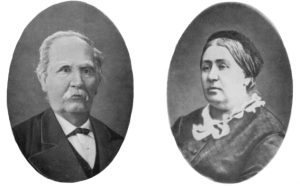
Composer’s parents – Vitaliy Romanovych Lysenko and Olha Yeremiivna Lysenko
Mykola’s mother, Olha Yeremiyivna, came from the Poltava landowning family of the Lutsenkos, also of Ukrainian gentry descent. Her family, like the Lysenkos, was part of the local elite in the Poltava Governorate, with ties to the region’s cultural and historical traditions. The Lutsenko family’s status as landowners placed them in a similar social stratum to the Lysenkos, and her marriage to Vitaliy solidified the family’s position within the gentry.
Olha Yeremiyivna, studied at the Smolny Institute for Noble Maidens in Saint Petersburg. His mother played a crucial role in Mykola’s early cultural and linguistic development. She introduced Mykola to music early in life, teaching him to play the piano when he was just five years old. This early musical education laid the foundation for his later studies at the Leipzig Conservatory and his career as a pianist and composer.
Both parents, through their gentry status and regional ties, exposed Mykola to the dual worlds of Ukrainian tradition and Russian imperial society. Olha’s active role in teaching him music was particularly formative, while Vitaliy’s position provided the resources for Mykola’s education and eventual cultural activism.
Early Life
Mykola Lysenko grew up in a culturally rich but politically constrained environment. His childhood was marked by early signs of musical talent, shaped by his family’s support and the Ukrainian folk traditions that surrounded him. He was raised in a household that valued education and culture, despite the broader imperial efforts to suppress Ukrainian identity.
From an early age, Lysenko displayed a remarkable aptitude for music. At the age of five, Mykola’s mother noticed her son’s talent for music. Olha Yeremiyivna played the piano wonderfully, she gave him his first lessons, and began teaching him to play classical pieces on the piano,
laying the foundation for his lifelong passion for music.
Mykola’s natural talent was evident in his ability to quickly master the instrument, showing both technical skill and an intuitive sense of melody. By his early childhood, he was already performing simple pieces, impressing family and visitors with his precocious ability. By the age of six, the boy played cleanly and with technical skill, and at nine, he composed his first musical piece — Polka for piano, which his father, Vitaliy, published as a birthday gift.
His parents’ encouragement laid the foundation for his lifelong dedication to music and to Ukrainian cultural traditions. The rural setting of Hrynky exposed him to Ukrainian folk songs, which were performed by local peasants and likely influenced by the region’s rich musical traditions. These early encounters with folk music became a cornerstone of his later ethnomusicological work.
Education
As members of the gentry, the Lysenko family provided Mykola with a privileged upbringing. His childhood was not solely defined by music; he was also intellectually curious and excelled in academic pursuits. He received home education with private tutors, which was typical for children of his social class. This included instruction in languages, literature, and other subjects, preparing him for formal schooling.
Around the age of nine (circa 1851), Mykola was sent to prestigious boarding schools in Kyiv, first he studied at the Weil Boarding School, where he received initial music lessons from the Czech teacher Neinkvych, and later at the Geduen Boarding School under the guidance of another Czech instructor, Alois Panochini. These institutions were designed to prepare young students for entry into elite gymnasiums, emphasizing classical languages, sciences, and basic arts.
Lysenko began his studies at the Second Kharkiv Gymnasium in Kharkiv (then part of the Russian Empire) in 1855, following preparatory education in Kyiv at boarding schools. The future composer pursued his secondary education at the prestigious Second Kharkiv Gymnasium. This institution was a leading classical gymnasium in the region, emphasizing humanities, sciences, and languages, and it played a key role in shaping Lysenko’s early intellectual development before he pursued higher studies in natural sciences and music. He continued at the gymnasium until his graduation in 1859.
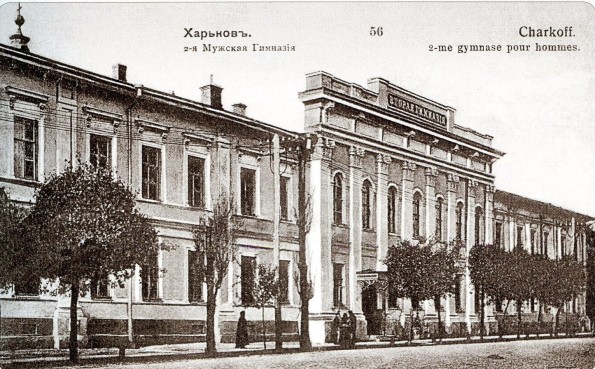
Second Kharkiv Gymnasium
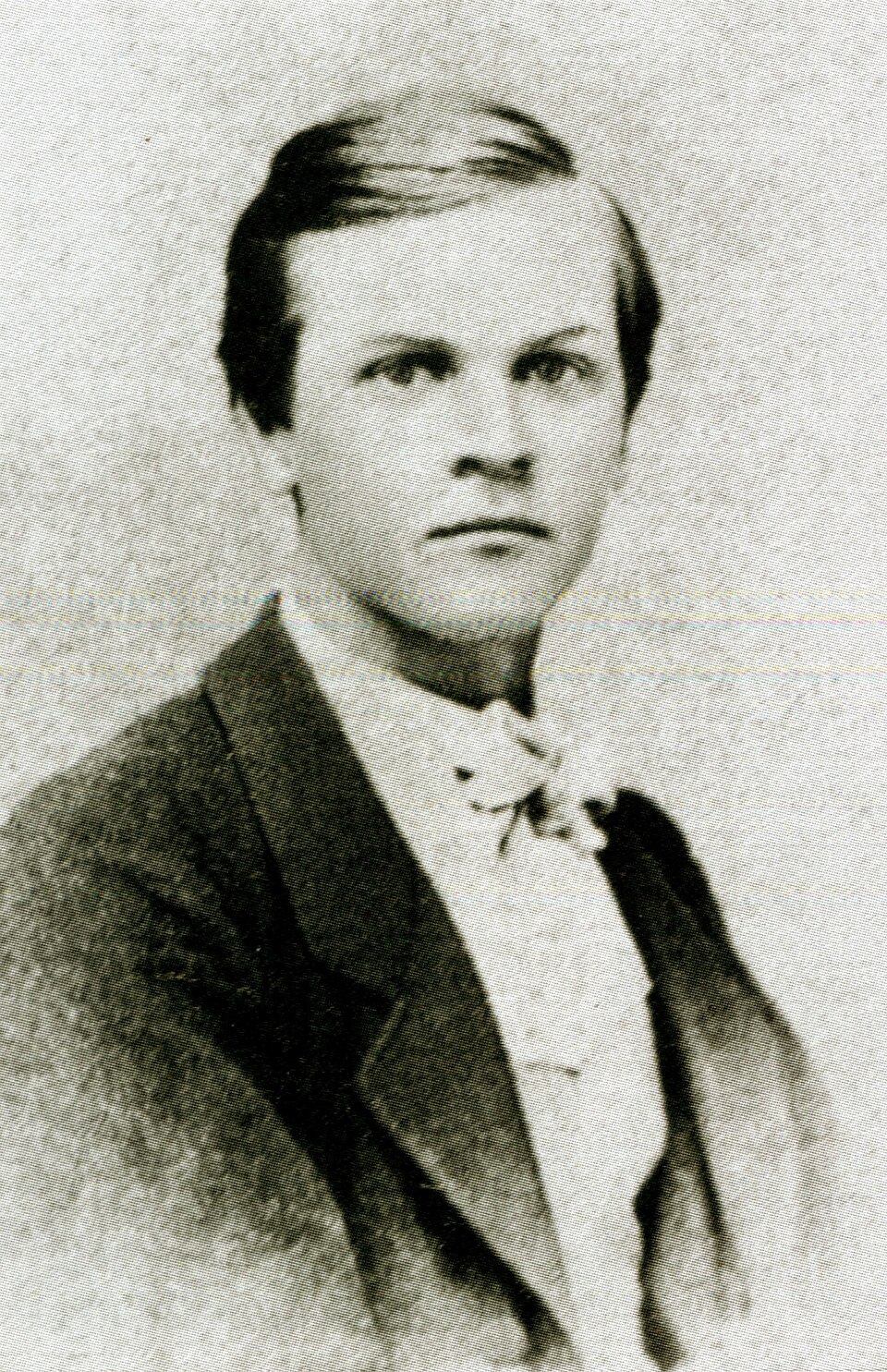
Mykola Lysenko in his youth
During his time there, Lysenko studied under notable educators, including Mykola Dmitriev (a Russian literature teacher) and the Czech musician Yosyf Vilchek, who provided private piano lessons. These experiences complemented his home-based musical training from his mother, Olha Yeremiivna, and allowed him to perform publicly on piano while honing his compositional skills. While still a gymnasium student, he performed at soirées and balls, playing piano sonatas by Mozart and Beethoven,
Chopin’s waltzes, and improvising on folk‐song themes. So, the education and environment encouraged both classical repertoire and creativity rooted in Ukrainian folk sources.
The gymnasium not only provided Lysenko with a rigorous classical education but also exposed him to Ukrainian cultural influences through student circles and his family’s Cossack heritage, which included folklore from the Starodub region. These experiences planted the seeds for his lifelong commitment to Ukrainian folk music and national identity, evident in later works like his operas Taras Bulba, Natalka Poltavka and the spiritual anthem Prayer for Ukraine.
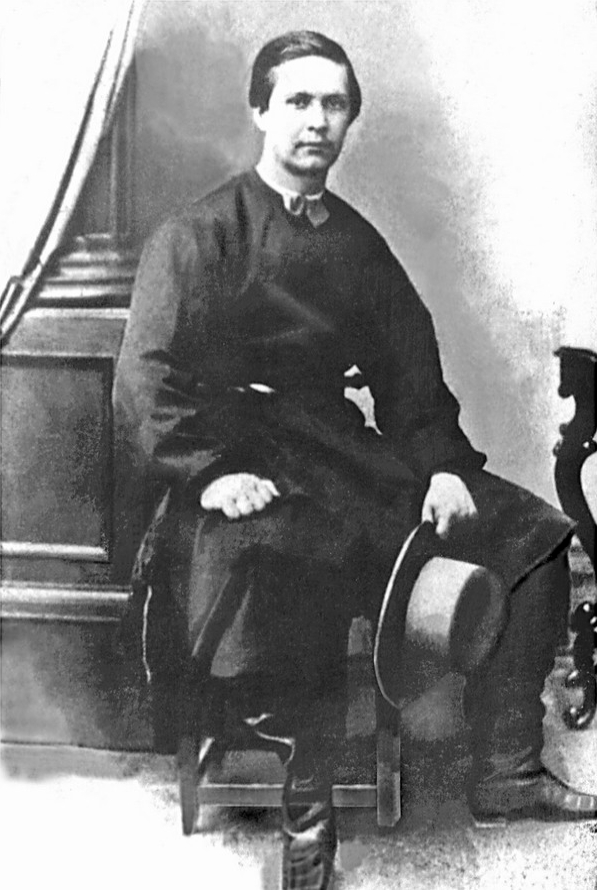
Mykola Lysenko, a student at Kyiv University, 1861
Immediately after graduating in 1859, Lysenko enrolled in the Faculty of Natural Sciences at Kharkiv University, studying alongside his cousin Mykhailo Starytskyi, a future collaborator and prominent Ukrainian writer. Financial difficulties forced the Lysenko family to relocate to Kyiv in 1860, where he transferred to Kyiv University, graduating in 1865 with a degree in natural sciences. This academic foundation later influenced his ethnomusicological work, including collections of Ukrainian folk songs.
In May 1865, Lysenko successfully defended his dissertation titled "Reproduction of Filamentous Algae" at Kyiv University, earning the degree of Candidate of Natural Sciences (equivalent to a modern master’s degree). His dissertation focused on the reproductive mechanisms of filamentous algae, a topic reflecting the era’s growing interest in botany and cellular biology. This academic achievement demonstrated Lysenko’s analytical rigor and scientific training, which later informed his systematic approach to collecting and analyzing Ukrainian folk songs. His scientific background provided a methodological framework for his ethnomusicological work, including his seminal collections of Ukrainian folk melodies, which he began compiling in the 1860s.
On 19 February 1865, he gave his first public performance in Kyiv as a pianist at a concert of the Russian Musical Society, playing Beethoven’s Piano Concerto No. 3.
Involvement in the Kyiv Hromada and Ukrainian Cultural Circles
During the 1860s, Ukrainian intellectual circles – especially at Kyiv University – were infused with a spirit of patriotism and national revival. This environment nurtured a sense of cultural pride and resistance against the imperial Russian influence. The Ukrainian student community felt strongly about the importance of promoting Ukrainian culture, language, and history, which shaped Lysenko’s outlook and future work.
Lysenko was deeply involved with the Kyiv Hromada (meaning Kyiv Community) or Stara Hromada (the Old Community) (1859 – 1876), a semi-secret intellectual society focused on Ukrainian national revival, education, and culture. The Kyiv Hromada played a critical role in the development of Ukrainian cultural and political movements in the 19th century. The Hromada was an intellectual and cultural movement aimed at reviving and preserving Ukrainian culture, particularly in the face of Russian imperialism.
The members of the Hromada were some of the first intellectuals to articulate the idea of Ukrainian cultural independence. They worked to develop a distinct national identity separate from the Russian Empire, which included promoting the Ukrainian language, literature, and art. Key associates included: Lysenko’s cousin Mykhailo Starytsky (a writer and playwright, was instrumental in promoting Ukrainian literature and culture), Mykhailo Drahomanov (a philosopher and political activist, emphasized the importance of Ukrainian self-determination and the revival of Ukrainian traditions), Petro Kosach (an intellectual and writer, a crucial figure in the Hromada movement, father of a famous Ukrainian poet Lesya Ukrainka), Tadei Rylsky (ethnographer, publicist, community activist, father of Ukrainian poet Maksym Rylsky), Pavlo Chubynsky (author of Ukraine’s national anthem “Ukraine Has Not Yet Perished”). Mykola Lysenko, as a central member, used his music as a tool for national expression, taking traditional Ukrainian folk music and integrating it into his classical compositions. This laid the foundation for Ukrainian classical music, which had its own identity within the broader European classical tradition.
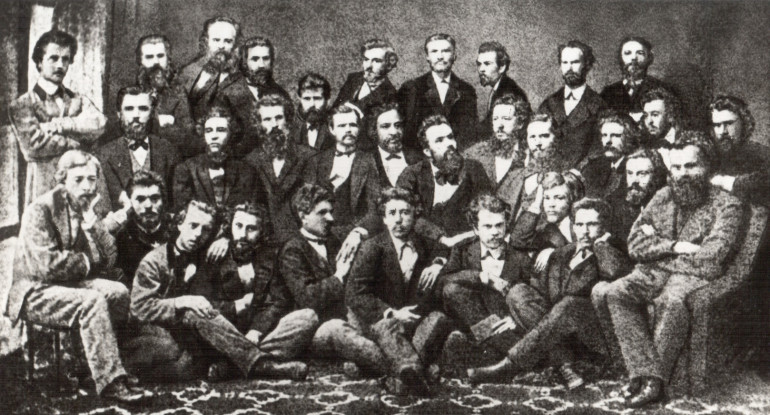
The Kyiv Hromada in 1874
One of the primary goals of the Hromada was to revive the Ukrainian language, which was suppressed under the Russian Empire. They opened and taught in Sunday schools and libraries for the common people (often at their own expense), organized cultural events, and published works in Ukrainian to promote the language.
Lysenko’s initiative to found and lead a student choir was a practical embodiment of his commitment to Ukrainian culture. This wasn’t just about singing – it was an active way to promote Ukrainian songs and engage students in nationalistic activities. Through the choir, he promoted the use of Ukrainian songs and the Ukrainian language in a public context. This was a direct challenge to the dominance of Russian culture and language at the time. The choir became a symbol of the movement. Additionally, by organizing concerts and other public performances, Lysenko helped to popularize Ukrainian music and spread nationalist ideas among a wider audience.
Lysenko’s work with the Kyiv Hromada also involved ethnographic activities – studying and collecting Ukrainian folklore, music, and traditions. This interest was not only artistic but deeply political, as it aimed to preserve and celebrate Ukrainian identity in the face of Russian imperial control. Lysenko was especially passionate about collecting Ukrainian folk songs and traditional music, which later became the foundation for much of his own compositional work. His efforts were not just about preserving the past, but about using these traditions to forge a new national culture that could stand alongside the great European traditions.
Civil Service in Tarashcha (1865–1867)
Immediately after graduating from the Kyiv University, Mykola Lysenko was required to complete two years of civil service, a common obligation for university graduates at the time. From 1865 to 1867 he worked in Tarashcha (then in Kyiv Governorate, modern-day Kyiv Oblast) as a peace mediator or arbitrator (myrovyi poserednyk), an official position created after the 1861 emancipation of the serfs to resolve land disputes between former landowners and peasants. Notably, his father, Vitalii Romanovych Lysenko, an officer in a dragoon regiment, was also stationed in Tarashcha at the time. This period was not artistically idle. While living in Tarashcha, the entire Lysenko family actively collected ethnographic material. Together they produced and published the study “On Historical Preferences in Tastes and Fashions of Folk Clothing in the Skvyra and Tarashcha Districts” – an early example of Lysenko’s lifelong interest in Ukrainian folk culture.
Olha O’Connor – the First Wife
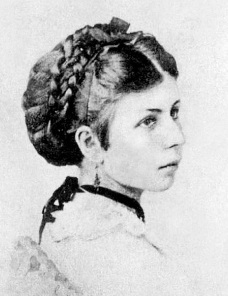
Olha O’Connor – Lysenko’s first wife
Lysenko married Olha O’Connor (also spelled O’Conor or O’Konnor) in the summer of 1868, when he was 26. She was his distant relative from a family of landowners with Irish (or Scottish-French-Irish) heritage, though she was raised in Ukraine. Olha was Lysenko’s student and he was her piano teacher, and their shared passion for music – specifically her talent as a vocalist – brought them together.
They met through family connections and shared musical and cultural interests. Lysenko took her with him to Leipzig, where she studied vocals while he pursued his musical education. Their marriage was initially loving and close; they shared a deep bond, and Lysenko dedicated at least 11 works to her, including the romance When Two People Must Part (Koly rozluchayutʹsya dvoye) on words by Heinrich Heine and arrangements of Ukrainian folk songs. Olha O’Connor performed the main role in his opera Christmas Eve when it premiered in Kyiv in January 1874. The opera, based on Gogol’s Christmas Eve, was a landmark work, and her involvement in it speaks to the deep artistic bond she and Lysenko shared from the outset of their relationship.
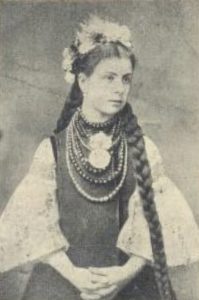
Olha O’Connor in the role of Oksana from the opera Christmas Eve
The couple was very close and deeply in love, but separated after more than 10 years of marriage. They had no children (Olha reportedly could not have them due to health issues). Officially, they never divorced, in order to continue their careers without scrutiny. Lysenko never publicly mentioned the reason for their separation and remained friends with Olha for the rest of his life. Over time, their marriage became unhappy. Olha suffered from a hereditary illness, lost her voice, experienced depression, and required treatment. They separated amicably around 1878–1880 without a formal divorce (which was very difficult at the time and could harm Lysenko’s teaching career). They remained on friendly terms, and Olha O’Connor outlived Lysenko, passing away in 1930. She later legally adopted the children from his second relationship to give them official status and the Lysenko surname.
Leipzig Conservatory Studies
In 1867, once his two-year civil-service term ended, Mykola Lysenko made the decisive step toward a professional musical career. Realizing that the Russian Empire lacked the rigorous educational infrastructure he craved, he travelled to Germany. He sought a curriculum that balanced classical tradition with modern virtuosity. From 1867 to 1869 Lysenko studied at the Leipzig Conservatory (now known as the Leipzig University of Music and Theatre), a period that played a crucial role in shaping his artistic identity and professional skills. When Lysenko arrived in Leipzig, the conservatory was one of Europe’s leading centres of musical education, founded by Felix Mendelssohn. It was known for its rigorous curriculum rooted in the German classical tradition. Lysenko immersed himself in studies of piano, composition, orchestration, and music theory, receiving systematic training that was largely unavailable in Ukraine at the time.
In the Leipzig Conservatory Lysenko would study piano with prominent musicians such as Carl Reinecke and Ignaz Moscheles, composition with Ernst Richter, and also learn violin and organ. Under their guidance, Lysenko honed a sophisticated, “Leipzig-style” technique characterized by clarity and elegance, he refined his technical mastery and gained a deeper understanding of Western European musical forms, including sonata structure, harmony, and counterpoint. This rigorous training allowed Lysenko to eventually synthesize complex Western forms (like the sonata and opera) with Ukrainian folk melodies. Lysenko gained a deep understanding of the symphonic palette, which he later applied to his monumental operas like Taras Bulba.
While in Leipzig, Lysenko was exposed to the works of composers like Johann Sebastian Bach, Ludwig van Beethoven, and Robert Schumann. This environment broadened his musical horizons and strengthened his compositional discipline. At the same time, he remained deeply connected to Ukrainian folk traditions, collecting and studying folk songs even during his time abroad. By the end of 1867 he had already begun performing Ukrainian songs in his own arrangements on European stages – notably a successful concert in Prague on 28 December 1867.
Lysenko graduated in 1869 with strong credentials as a pianist and composer. During his studies, Lysenko was already composing ambitious works across multiple genres. These included orchestral and chamber music such as a symphony movement, the overture Oh, the Cossack Took to Drinking (Oi zapyv kozak, zapyv), a string quartet, and a piano trio – showing both technical skill and creative range.
During this intense period, Lysenko began his lifelong project: setting the poetry of Taras Shevchenko to music. He wrote his first Shevchenko settings: The Testament (Zapovit), Oh, I am Alone (Oi odna ya, odna), and Mist Across the Valley (Tuman, tuman dolynoyu).
Lysenko’s first published collection appeared in Leipzig, thanks to the quiet support of Petro Kosach (the father of poet Lesya Ukrainka), a close friend who financed the publication anonymously as an act of generosity. This gesture underscores both the challenges Lysenko faced early in his career and the strong personal networks that supported the development of Ukrainian culture at the time. This publication was revolutionary because it was printed with high European quality, signalling to the world that Ukrainian music was a serious art form.
When Lysenko returned to Kyiv in 1869, he was no longer just a musician; he was a national figure. He brought back the rigorous training of the Leipzig school but applied it strictly to Ukrainian themes. This period laid the groundwork for his future masterpieces, including the opera Taras Bulba and the Prayer for Ukraine (Bozhe Velykyi, Yedynyi).
Lysenko’s graduation from Leipzig was so successful that he was offered a position as a court pianist or a professor in Russia, but he chose to return to Kyiv to live a much more difficult life dedicated to Ukrainian culture under the restrictive Ems Ukaz (a decree issued by Alexander II in 1876 that banned the use of the Ukrainian language in print, education, and public performances within the Russian Empire).
Kyiv Period
After returning to Kyiv from the Leipzig Conservatory in 1869, Mykola Lysenko became the central figure in Ukrainian musical and cultural life. He committed himself to building a distinctly national Ukrainian classical music tradition rooted in folk melodies, rhythms, and the Ukrainian language, while working as a pianist, teacher, conductor, composer, ethnomusicologist, and public activist.
His return to Kyiv was not just a homecoming, but a strategic entry into the city’s growing professional music scene. Lysenko made a deliberate choice: instead of pursuing a career in major European centres, he focused on developing Ukrainian culture at home. He continued collecting and studying folk music, eventually arranging and publishing hundreds of Ukrainian folk songs. These were not simple transcriptions – he carefully harmonized them using classical techniques, helping elevate folk traditions to the concert stage.
Around the same time, Lysenko’s commitment to Ukrainian musical development extended into education. In the 1869-1870 academic year, at 27 years old, Lysenko began teaching at the Kyiv Music School, which had recently been founded as part of the Russian Music Society (RMS). This school was one of the first institutions in Ukraine focused on music education. He was appointed as a piano teacher, where he quickly earned a reputation for his thorough knowledge of both piano technique and musical theory. Lysenko’s role as a teacher was critical not only in educating young pianists, but also in shaping the next generation of Ukrainian musicians who would carry forward his vision of a national music school rooted in Ukrainian folk traditions and European classical forms. Through his position, Lysenko helped establish a pedagogical framework that merged Western European classical techniques with the Ukrainian musical heritage that he so passionately preserved and promoted. Although the Kyiv Music School was still in its infancy, Lysenko’s influence on it was profound, and his teaching laid the groundwork for what would eventually become the National Music Academy of Ukraine (founded later as the Kyiv Conservatory).
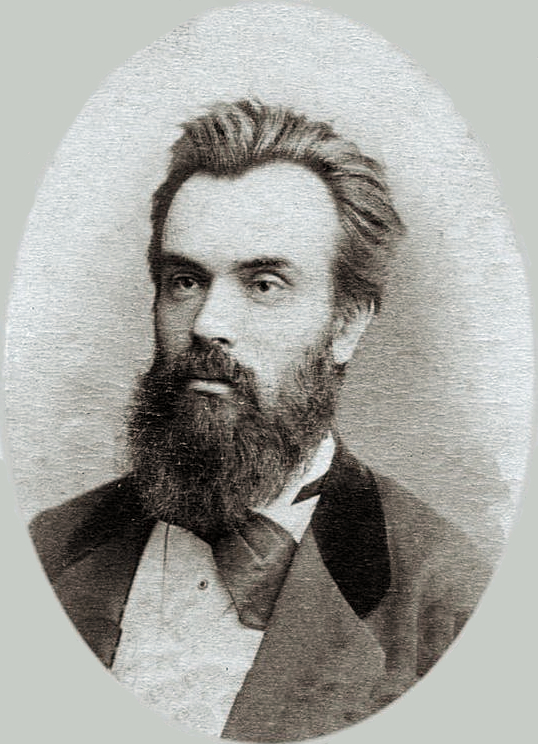
Mykhailo Petrovych Starytsky in 1870s (was a Ukrainian writer, poet, and playwright, known as one of the founders of Ukrainian professional theatre)
In addition to his work as a pianist and educator, Lysenko’s influence in Kyiv was far-reaching. He was an important figure in Kyiv’s musical circles, organizing and participating in musical evenings that promoted Ukrainian composers and musicians. Lysenko was a driving force behind the establishment of choirs, working with vocalists and instrumentalists to perform both Ukrainian folk songs and classical works, often incorporating Ukrainian texts. He also worked closely with other Ukrainian cultural figures, such as the writer Ivan Franko and the composer Mykhailo Starytsky, contributing to a shared Ukrainian cultural revival in the late 19th century.
Lysenko’s February 1870 concert in the Noble Assembly Hall featured works by Schumann and Schubert alongside his own pieces, including selections from the first series of Music to the Kobzar (settings of Taras Shevchenko’s poetry). The success of such performances led to expanded activity beyond Kyiv, with concerts in cities like Poltava, Chernihiv, and Katerynoslav.
The touring activity of Mykola Lysenko in the 1890s and early 1900s was one of the most important phases of his cultural work, going far beyond ordinary concert performance. These tours took place at a time when Ukrainian cultural expression faced serious political and linguistic restrictions within the Russian Empire, making public promotion of Ukrainian-language music both artistically and socially significant.
Lysenko’s concert tours in 1892-1893, 1897, 1899, and 1902 covered many cities across Ukraine and beyond, including major cultural centers such as Kyiv, Kharkiv, Odesa and Poltava. These performances attracted diverse audiences – students, intelligentsia, and ordinary citizens – many of whom were eager to hear Ukrainian music in a formal concert setting. The structure of the concerts was carefully designed. In the first part, Lysenko appeared as a virtuoso pianist, presenting his own works, including arrangements of Ukrainian folk songs and original compositions inspired by national themes. In the second part, a choir performed under his direction, showcasing choral arrangements that highlighted the richness of Ukrainian folk traditions and poetic texts, particularly those of Taras Shevchenko. Lysenko’s role as accompanist emphasized his deep involvement in every musical detail of the performance.
These tours were logistically demanding. Lysenko personally organized rehearsals, coordinated performers, secured venues, managed finances, and handled promotion. This level of involvement reflects not only his dedication as a musician but also his role as a cultural leader and advocate. Importantly, these tours helped to establish a national musical identity. By bringing Ukrainian-language repertoire to wide audiences, Lysenko strengthened the legitimacy of Ukrainian music as a professional art form. His work also inspired a new generation of composers and performers, laying the groundwork for the development of Ukrainian classical music in the 20th century. In essence, these concert tours functioned as a form of cultural activism: they preserved folk traditions, elevated them to the concert stage, and asserted the cultural autonomy of Ukraine through music.
The premiere of The Black Sea Cossacks (Chornomortsi) on December 5 (17), 1872 marked a foundational moment in the emergence of a professional Ukrainian musical theater tradition. The event took place in Kyiv, at a relatively modest venue – the Lindfors Sisters’ Private School – which reflects the limited institutional support available for Ukrainian-language performances at the time.
The choice of the Lindfors Sisters’ School at 21 Fundukleivska Street (now Khmelnytsky Street) was strategic, because the Russian authorities strictly monitored public theaters, Lysenko and Starytsky staged this as an “amateur” or “private” performance within an educational setting. This allowed them to bypass some of the rigid censorship that applied to official state stages. The room was packed with the Kyiv Hromada (intelligentsia). It became a social hub for the Ukrainian elite, including families like the Drahomanovs and the Kosaches (Lesya Ukrainka’s family).
The opera The Black Sea Cossacks, composed by Mykola Lysenko, was based on a literary work by Yakiv Kukharenko and adapted into a libretto by Mykhailo Starytsky, tells the story of the Cossacks who moved to the shores of the Black Sea (the Kuban) after the destruction of the Zaporizhian Sich. It touched on themes of freedom, migration, and the preservation of traditions. Starytsky not only wrote the text but also directed the staging, playing a central role in shaping the theatrical side of the production. Their collaboration became one of the most influential creative partnerships in Ukrainian cultural history. The production brought together amateur and semi-professional performers, many of whom were members of the Kyiv Hromada. Despite limited resources, the creators managed to present a work that combined elements of folk music, national history, and theatrical storytelling. Lysenko himself sat at the piano, leading the musical direction. His presence ensured that even with limited instruments, the musical integrity was preserved. Lysenko’s score drew heavily on Ukrainian folk melodies, helping to establish a distinctly national musical language.
The success of The Black Sea Cossacks encouraged further theatrical initiatives. It demonstrated that Ukrainian opera could attract audiences and sustain artistic quality, paving the way for later developments in both music and drama. This event also strengthened the role of Kyiv as a cultural center for Ukrainian arts.
St. Petersburg Studies
In 1874-1875, Lysenko improved his skills in St. Petersburg under the renowned Russian composer Nikolai Rimsky-Korsakov, one of the leading members of the Mighty Handful also known as The Five, a group of Russian composers who sought to create a distinctive national style of music (Aleksander Borodin, Mily Balakirev, César Cui, Modest Mussorgsky, Nikolai Rimsky-Korsakov).
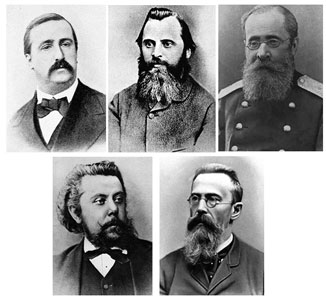
The Five (The Mighty Handful): Mily Balakirev (the leader), Aleksander Borodin, César Cui, Modest Mussorgsky, Nikolai Rimsky-Korsakov
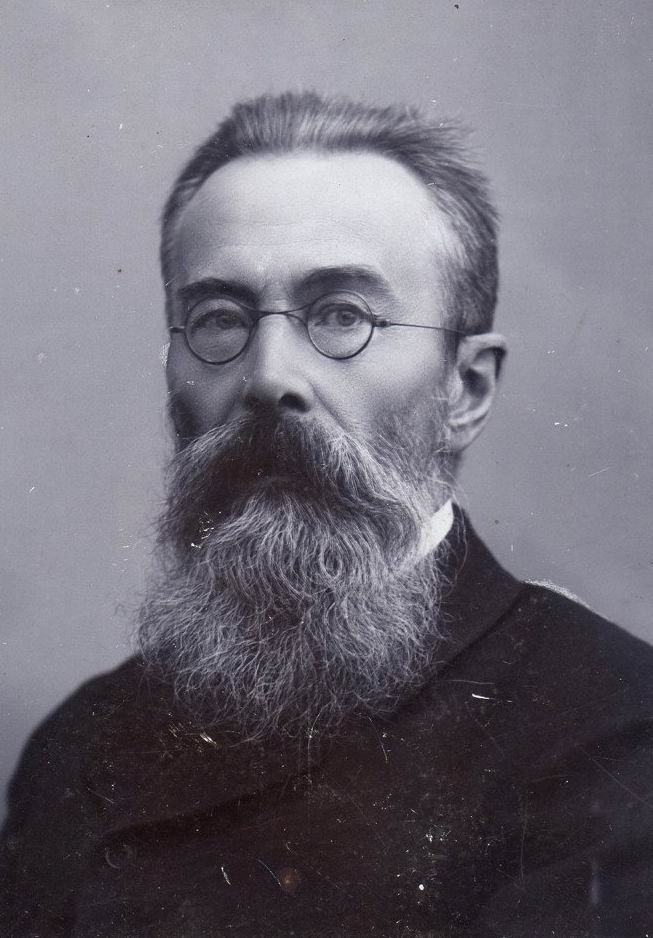
Nikolai Andreyevich Rimsky-Korsakov
Rimsky-Korsakov was an influential figure in Russian music and a major proponent of using folk material in classical music, which resonated deeply with Lysenko’s own musical ideals. Although Rimsky-Korsakov’s style was heavily influenced by Russian folk themes, his approach to orchestration and his understanding of Western European classical traditions – particularly the symphonic and operatic forms – provided Lysenko with invaluable techniques in both composition and arrangement. Lysenko didn't go to learn basic melody; he was already a master of folk song. Rimsky-Korsakov taught Lysenko about orchestration, counterpoint, and harmony, areas in which Lysenko sought to strengthen his technical foundation.
During this period of intense study, Lysenko’s productivity was staggering. He worked on the second version of his opera Christmas Night (Rizdviana Nich), applying the new orchestration techniques he learned from Rimsky-Korsakov. Lysenko continued organizing his third and fourth “series” of Ukrainian folk songs, creating complex choral arrangements that moved away from simple “folk singing” toward “choral art.” He worked on his First Rhapsody on Ukrainian Themes (Golden Keys) for piano, which remains a staple of the Ukrainian classical repertoire today.
While Lysenko learned technical skills, Rimsky-Korsakov became fascinated by the Ukrainian folk melodies Lysenko shared. This influence can be heard in Rimsky-Korsakov's later works, such as the opera May Night.
Living in St. Petersburg placed Lysenko in a difficult psychological position. He was surrounded by the Mighty Handful (The Five), a group of Russian composers who were also trying to create a national style. Many urged Lysenko to stay in St. Petersburg or move to Moscow, where he could have had a comfortable career as a “Russian” composer of Ukrainian origin. Lysenko famously refused. He insisted that his work must serve the Ukrainian people specifically. He even refused to allow his opera Taras Bulba to be performed at the Imperial Opera because the administration demanded he translate the libretto from Ukrainian into Russian.
The period of 1874-1875, when Lysenko studied under Nikolai Rimsky-Korsakov, was a formative one in the development of his unique style. While Lysenko remained devoted to Ukrainian music and its folk traditions, his experience in St. Petersburg allowed him to refine his technical skills and broaden his musical outlook. This phase of his education was instrumental in shaping his later works, including his operas, choral pieces, and symphonic compositions, which would establish him as one of the founding figures of Ukrainian classical music.
Mykola Lysenko’s Kyiv Years (1878-1912)
While he had returned to the city earlier (around 1869 after Leipzig and again after St. Petersburg studies in 1876), the period from 1878 onward marked a phase of deepening personal commitments, prolific creative output, teaching, public activism, and resistance to imperial restrictions on Ukrainian culture.
In 1878, Mykola Lysenko took up the position of piano teacher at the Kyiv Institute for Noble Maidens (was a prestigious, conservative state boarding school designed to cultivate the daughters of the aristocracy into refined wives, mothers, and governesses. The curriculum emphasized etiquette, languages, and the arts.). Lysenko held this post for many years (sources indicate activity continuing into the early 1900s, with some references noting up to around 1906). As a piano pedagogue, Lysenko brought professional rigor and artistic depth. He was known for carefully selecting students according to his taste, often favoring talented Ukrainian girls. His approach went beyond technical mastery: he incorporated music theory, history, and creative encouragement. He helped girls master theory and history, then supported their creative efforts, which was relatively advanced for the era.
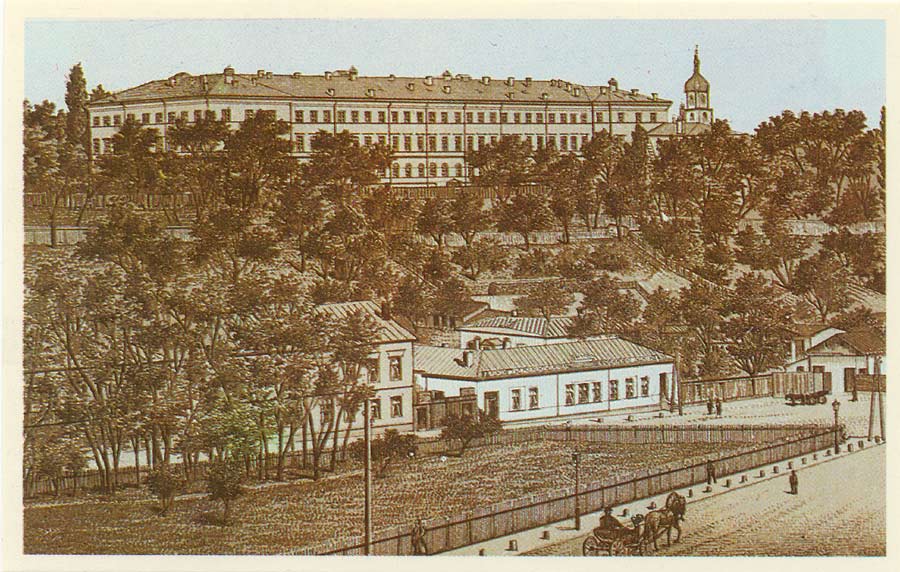
Kyiv Institute for Noble Maidens
Lysenko’s time at the Kyiv Institute for Noble Maidens showcased him not only as a demanding piano instructor but as a mentor who nurtured talent, creativity, and national consciousness. It was one of the many ways he shaped generations of musicians while advancing Ukrainian culture under imperial constraints. His pedagogical portrait from this era reveals a patient, encouraging, and visionary teacher whose influence extended far beyond the institute’s walls.
Olha Lypska – The Second Wife (Common-Law) and Mother of His Children
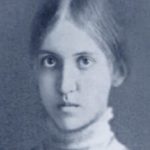
Olha Antonivna Lypska – Lysenko’s Second Wife (Common-Law)
Olha Antonivna Lypska was the daughter of retired lieutenant colonel Anton Yakovych Lypsky, a Pole by origin, and a noblewoman from Chernihiv. In 1877, at a concert in Chernihiv, she met Mykola Lysenko, who offered to help prepare her for entrance to the conservatory. Her father brought her to the Lysenko family at the end of April 1877, and since the Lypskys had no acquaintances in Kyiv, Mykola suggested she stay with his parents, with whom he also lived.
At the time, Lysenko was already married to Olha O’Connor, they never formally divorced, since divorced people lost the right to give music lessons, which was a source of income for both. In 1878 Lypska became Mykola Lysenko’s common-law wife. Their marriage was unofficial because his first marriage had never been legally dissolved. Yet they lived together for 20 years and had seven children, two of whom died at a young age. The surviving children grew up in a musical environment, and many pursued music professionally: Kateryna Mykolaivna Lysenko – died as an infant; other daughters included Halyna (Halyna Lysenko-Shylo) and Mariana (Mariana Lysenko), who followed in her father’s footsteps as a pianist. Sons included Ostap (who taught music in Kyiv) and Taras (born around 1900; Lysenko was photographed with him in 1908).
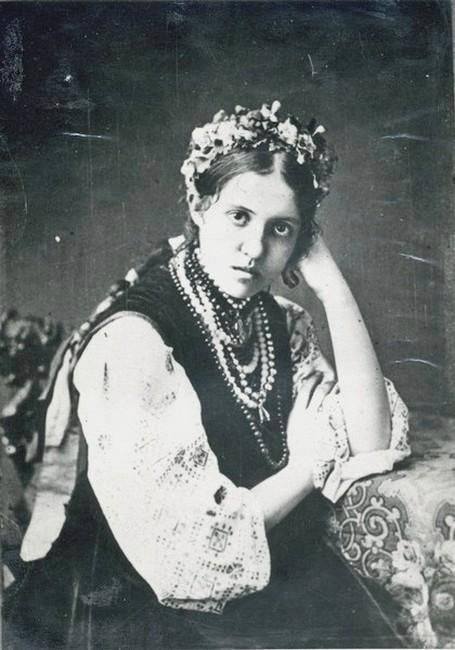
Olha Lypska in the 1880s
Olha Lypska managed the household, raised the children in a strongly Ukrainian cultural atmosphere (one of the few noble families speaking Ukrainian at home), and supported Lysenko’s work. Their home life was a conscious act of cultural identity. Their neighbours were the Starytsky family and the Kosach family – the family of the poet Lesia Ukrainka. All three families stayed in close contact, raised children, celebrated holidays together, and remained friends for the rest of their lives.
Olha Lypska tragically died after giving birth in 1900, a huge shock to Lysenko. Despite personal hardships, Lysenko remained deeply attached to his children and family, and several of them continued the musical and cultural traditions he helped establish in Ukraine. After Olha Lypska’s death, the first wife (Olha O’Connor) formally adopted them to legitimize their status.
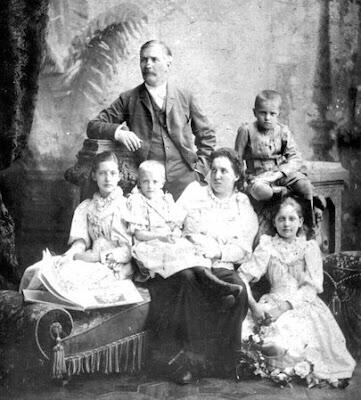
Mykola Lysenko with Olha Lypska and their children
Lysenko’s family life reflected the challenges of the era – legal barriers to divorce, health struggles, and the demands of his career as a cultural figure under Russian imperial restrictions on Ukrainian culture. Despite personal difficulties, his relationships were marked by shared musical passion, and his second family provided a supportive home environment aligned with his nationalist ideals.
Mykola Lysenko’s Final Years (1904–1912)
1. First National Music and Drama School in Kyiv
In 1904, Mykola Lysenko founded the first Ukrainian national Music and Drama School in Kyiv. It opened in the autumn of 1904 (classes began around 1 September) at 15 Velyka Pidvalna Street (now Yaroslaviv Val). Lysenko became its first director. He directed it until his death in 1912; his daughter Mariana Lysenko later led it.
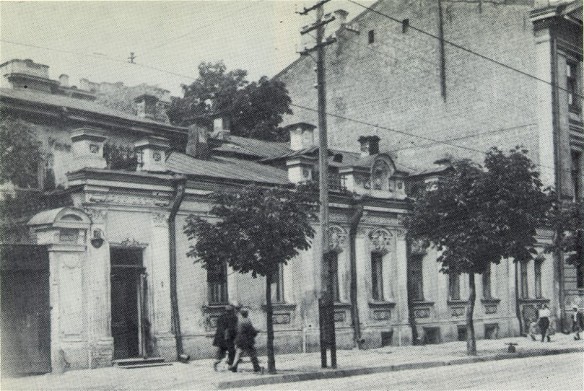
Lysenko Music and Drama School
The institution was established to promote Ukrainian music and provide professional training in music and theatre. The school offered a curriculum equivalent to that of higher educational institutions, with academic standards comparable to those of a conservatory. It had separate music and drama departments. Curriculum covered piano, strings, winds, solo singing, theory/composition, conducting, stage acting/declamation, and related subjects. Instruction was largely in Ukrainian (a rare and significant feature under the Russian Empire’s restrictions on the language).It admitted students of various ages (typically from age 9 for instruments; older for voice and drama) and offered both paid and free places.
Notable teachers included Lysenko himself (piano), Oleksander Myshuha and Mariia Zotova (voice), Hryhorii Liubomyrsky (theory), Mariia Starytska (drama), and others. Graduates included composers Kyrylo Stetsenko and Lev Revutsky, conductor Oleksander Koshyts, singer Mykhailo Mykysha, and actors/directors such as Oleksiy Vatulya and Borys Romanytsky.
It was the only Ukrainian higher music school of its time in the Russian Empire and a major centre for national musical and theatrical education. In 1918 it was reorganized as the Lysenko Music and Drama Institute; its successors include the Kyiv National I. K. Karpenko-Kary Theatre, Cinema and Television University (and elements that fed into the National Music Academy of Ukraine).
2. The Kyiv Boyan Musical and Choral Society
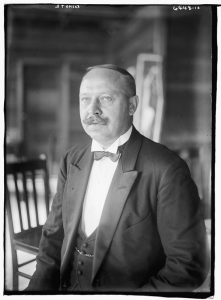
Oleksandr Koshyts was a Ukrainian choral conductor, arranger, composer, ethnographer, writer, musicologist, and lecturer.
In 1905, Mykola Lysenko, together with Oleksandr Koshyts (also spelled Koshetz or Koshyts), organized the music and choral society Kyiv Boyan (Kyivskyi Boyan), of which Lysenko served as chairman until the end of his life. The society played an important role in promoting Ukrainian choral music and national musical culture.
This society was part of the broader network of Ukrainian “Boyan” (named after the legendary bard from The Tale of Igor’s Campaign) musical and choral societies that began in Lviv in 1891 and spread across Galicia and later to other Ukrainian cities. The Kyiv branch was founded in 1905 through Lysenko’s efforts and gathered leading Ukrainian musicians of the time, including Kyrylo Stetsenko, Oleksandr Koshyts, and Yakiv Yatsynevych. Its concert programs emphasized Ukrainian music.
Lysenko remained its head until his death in 1912. The society contributed to the development of professional Ukrainian choral culture in Kyiv under the restrictions of the Russian Empire.
3. The Ukrainian Club (1908)
In 1908, Mykola Lysenko founded the Ukrainian Club in Kyiv and became the chairman of its governing board. The club united leading figures of Ukrainian science, culture, and the arts. The club was a literary and artistic society established as a centre for Ukrainian cultural activity under the restrictions of the Russian Empire. It served as an important centre of Ukrainian cultural and educational life, organising public lectures, literary and musical evenings, theatrical performances and cultural activities.
Notable participants and visitors included writers and intellectuals such as Lesya Ukrainka, her mother Olena Pchilka, Ivan Nechuy-Levytsky, Oleksander Oles, Mykhailo Kotsiubynsky, Ivan Franko, and Panas Myrny; actors Mariya Zankovetska and Mykola Sadovsky; and others including Ivan Ohiyenko, Dmytro Antonovych, and Serhii Yefremov. Lysenko composed a piano piece titled For the Housewarming (Na vkhidchyny) for the club’s opening.
The authorities closed the Ukrainian Club in 1912 (accused of subversive or anti-government activity). It was soon reorganized/revived in the same building as the Rodyna Club (meaning “Family”; the name was chosen in part to appear less political to officials, who may have read it as the Russian “Rodina” for “motherland”). It continued until around 1918 (or was disbanded at the start of World War I).In 1912, following its closure by the tsarist authorities, the organisation continued its activities under a new name, the Rodyna Club. Fedir Matushevsky became its chairman.
Mykola Lysenko’s Last Love
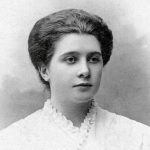
Inna Andrianopolska, Mykola Lysenko’s last love
On the cusp of his elder years, Mykola Lysenko experienced one final, passionate chapter of romance. Following the tragic death of his common-law wife, Olha Lypska, in 1900, Lysenko was left personally lonely, pouring his energy into raising his five children and building his newly founded music school.
However, in 1906, fate brought Inna Andriapolska into his life.
At the time of their meeting, Lysenko was a 64-year-old esteemed maestro, while Inna was just a 17-year-old student at the Kyiv Institute for Noble Maidens. Despite the 44-year age gap, Lysenko found himself utterly captivated. Inna was not only beautiful but possessed a deep musical sensibility that resonated with the aging composer. Under her influence, Lysenko remarked that he felt like a young man again – reignited by a feeling that was remarkably warm, pure, and joyful.
Despite their considerable age difference, Lysenko developed deep feelings for the young woman. Their relationship was largely maintained through correspondence, and their surviving letters, written between 1906 and 1910, reveal the intensity of his affection. In his letters, he called Inna his Muse, his angel and a part of his soul. He openly expressed his wish to marry her and share his life with her. He also acknowledged the difference in their ages, insisting that he was still young in spirit and full of energy.
Inna’s parents strongly disapproved of the relationship due to Lysenko’s age and political troubles with imperial authorities. After she finished her studies (around 1907), they sent her away from Kyiv – first to her family in Romny and later to St. Petersburg for language courses. Lysenko resigned from the Institute. The two continued corresponding for a time; Inna occasionally visited Kyiv, and a joint photograph of them survives. Eventually the relationship faded. Inna later married an artist in St. Petersburg.
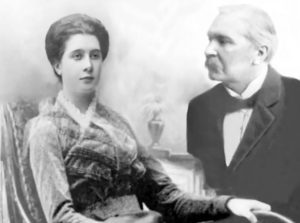
Mykola Lysenko and Inna Andrianopolska
This late romance also found an artistic expression in Lysenko’s music. Several of his piano compositions, including A Moment of Enchantment, The Longing and Waiting, Confession and Separation Waltz, have been associated with the emotions he experienced during this period.
The correspondence between Lysenko and Inna offers a rare glimpse into the composer’s intimate world, revealing a man whose capacity for love, passion and emotional inspiration remained strong even in the final years of his life.
Death and Funeral
On 6 November 1912, Mykola Lysenko passed away suddenly from a heart attack in Kyiv at the age of 70. He had been under stress from the recent forced closure of the Ukrainian Club (an important cultural and civic association he headed), which imperial authorities shut down after a search. On the morning of 24 October (Old Style; 6 November New Style) 1912, while preparing to go to his music and drama school, he suffered a severe attack and could not be saved. His unexpected death came as a great shock to the Ukrainian cultural community.
His funeral took place on 12 November 1912 and became one of the largest public gatherings Kyiv had ever witnessed. Over 30,000 people joined the funeral procession through the streets of Kyiv. Thousands of university students, intellectuals, cultural leaders and ordinary citizens gathered to pay their final respects to the outstanding composer. Numerous choral ensembles participated, performing funeral chants and works in Ukrainian. Delegations from various Ukrainian cities, as well as from other parts of Europe, came to honour his memory.
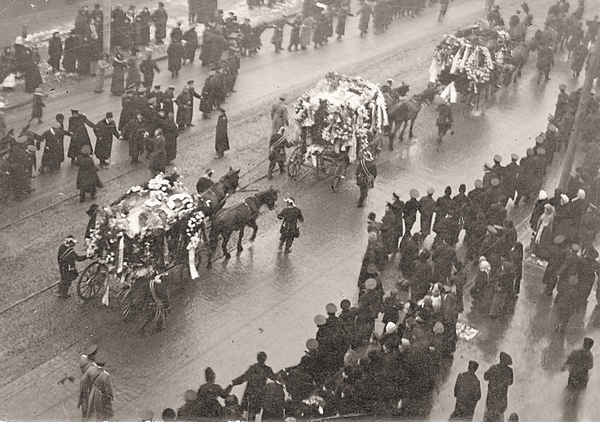
Mykola Lysenko’s funeral
His coffin, covered with a traditional red Cossack cloth, was carried in a solemn procession accompanied by numerous choirs and mourners. The funeral service was held at St. Volodymyr’s Cathedral, after which he was laid to rest at Baikove Cemetery in Kyiv, the resting place of many prominent Ukrainian artists, writers, and public figures. A monumental tombstone was later erected at his grave.
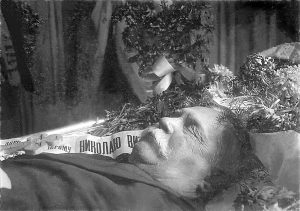
Mykola Lysenko lying in his coffin
Lysenko’s funeral became a powerful demonstration of Ukrainian national unity. His death was not simply the loss of a remarkable composer but the passing of a man who had devoted his entire life to the development and recognition of Ukrainian music and culture.
Lysenko’s Creative Legacy
Mykola Lysenko left an extensive and diverse musical legacy that laid the foundations for the development of Ukrainian classical music. His legacy has five main parts:
1. Opera
• Works include the singspiel Chornomortsi (Black Sea Cossacks, 1872), the operetta Natalka Poltavka (Natalka from Poltava, 1889), and operas based on Gogol: Christmas Night, Utoplena (The Drowned Maiden), and Taras Bulba.
• Taras Bulba is considered his greatest operatic achievement. Its grandeur, complexity and Ukrainian-language libretto prevented its staging in his lifetime. Tchaikovsky admired it, but Lysenko’s insistence on Ukrainian, not Russian, prevented a Moscow performance.
• He also wrote children's operas, such as Koza-Dereza and Pan Kotsky.
2. Songs and Shevchenko settings
• He composed 133 art songs, many to words by Shevchenko, Lesia Ukrainka, Ivan Franko, Heine, and others.
• He set 82 texts from Shevchenko’s Kobzar as songs, choral works and cantatas, collected as Music to the Kobzar.
3. Folk-song collecting and ethnomusicology
• His folk-song collections were published in seven volumes.
• His 1873–1874 studies of the blind kobzar Ostap Veresai were the first musical-ethnographic work of their kind and are still considered exemplary.
4. Instrumental and choral music
• Piano works include rhapsodies, a sonata, a suite, and Songs without Words, often using folk melodies, with some showing Chopin's influence.
• He also wrote chamber pieces, including a string quartet and works for violin and piano.
• He organized choirs and toured Ukraine with them (1893–1902).
5. Institutions and influence
• He founded the Lysenko Music and Drama School (1904) and co-founded the Boyan society (1905). He also led the Ukrainian Club (1908), as we covered.
• His pupils and associates included Stetsenko, Koshyts and Revutsky.
• Overall, he gave Ukrainian music a professional framework that let it develop independently of the dominant Russian and Polish traditions.
• His name lives on in conservatories, concert halls and festivals, and in the 20-volume collected works (Kyiv, 1950–59).
SHEET MUSIC
You can find and download free scores of the composer:
- Zaporizhian March (Mykola Lysenko)
- A Sad Song
- Elegy, Op.41 No.3
- Serenade, Op.37 No.3
- Gavotte, Op.29
- Impromptu in A minor
- Second Rhapsody on Ukrainian Folk Themes “Dumka–Shumka”, Op.18
- Melancholy Waltz, Op.17 No.1
- Song Without Words, Op.10 №2
- Song Without Words, Op.10 №1
- FIRST CONCERT POLONAISE, Op. 5
- Natalka’s Song from the opera Natalka-Poltavka
- NICH YAKA MISYACHNA (What a Moonlit Night)